

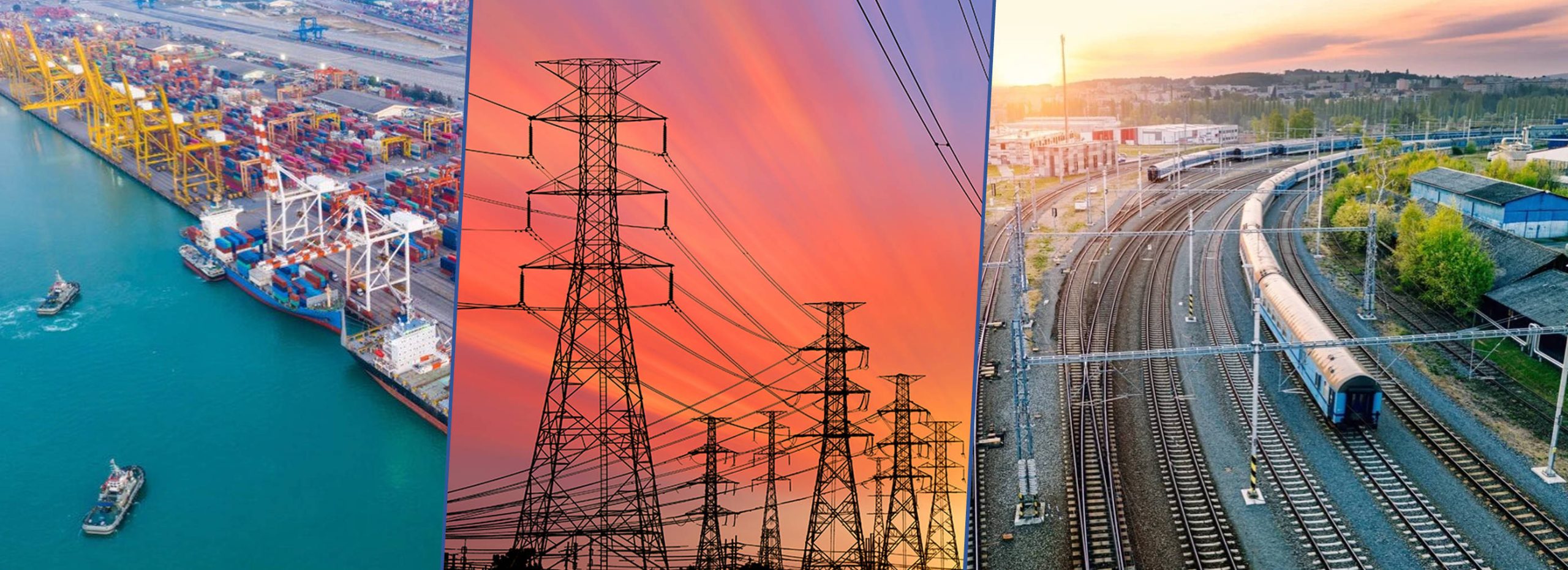

The energy sector, including subsectors such as mining, the gas industry, oil and petroleum products, and electricity generation and transmission, falls under the jurisdiction of the Ministry of Economy of the Slovak Republic, in accordance with Act No. 45/2011 Coll. on Critical Infrastructure. The transmission system represents a vital part of the national power network, ensuring the transport of electrical energy from power plants to distribution systems, which subsequently deliver to end consumers, including households, businesses, and industries. This system comprises high-voltage transmission lines, typically operating at 220 kV and 400 kV, and substations equipped with transformers and protective devices that enable the efficient and secure management of electricity flows over long distances. A reliable and resilient transmission system is essential for maintaining stability, security, and continuity of electricity supply, as even short-term disruptions can have severe social and economic consequences.
Case Study: High-voltage Transmission System
Introduction
Identification of the object
High- and extra-high-voltage transmission lines are a key component of the electrical power network. They ensure the transfer of electrical energy from power plants to distribution systems and supply strategic consumers. These lines are an essential part of the Slovak Republic’s critical infrastructure and are integrated into the European ENTSO-E network. Their destruction or outage could cause widespread economic and social damage, including potential threats to national security.
Technological description
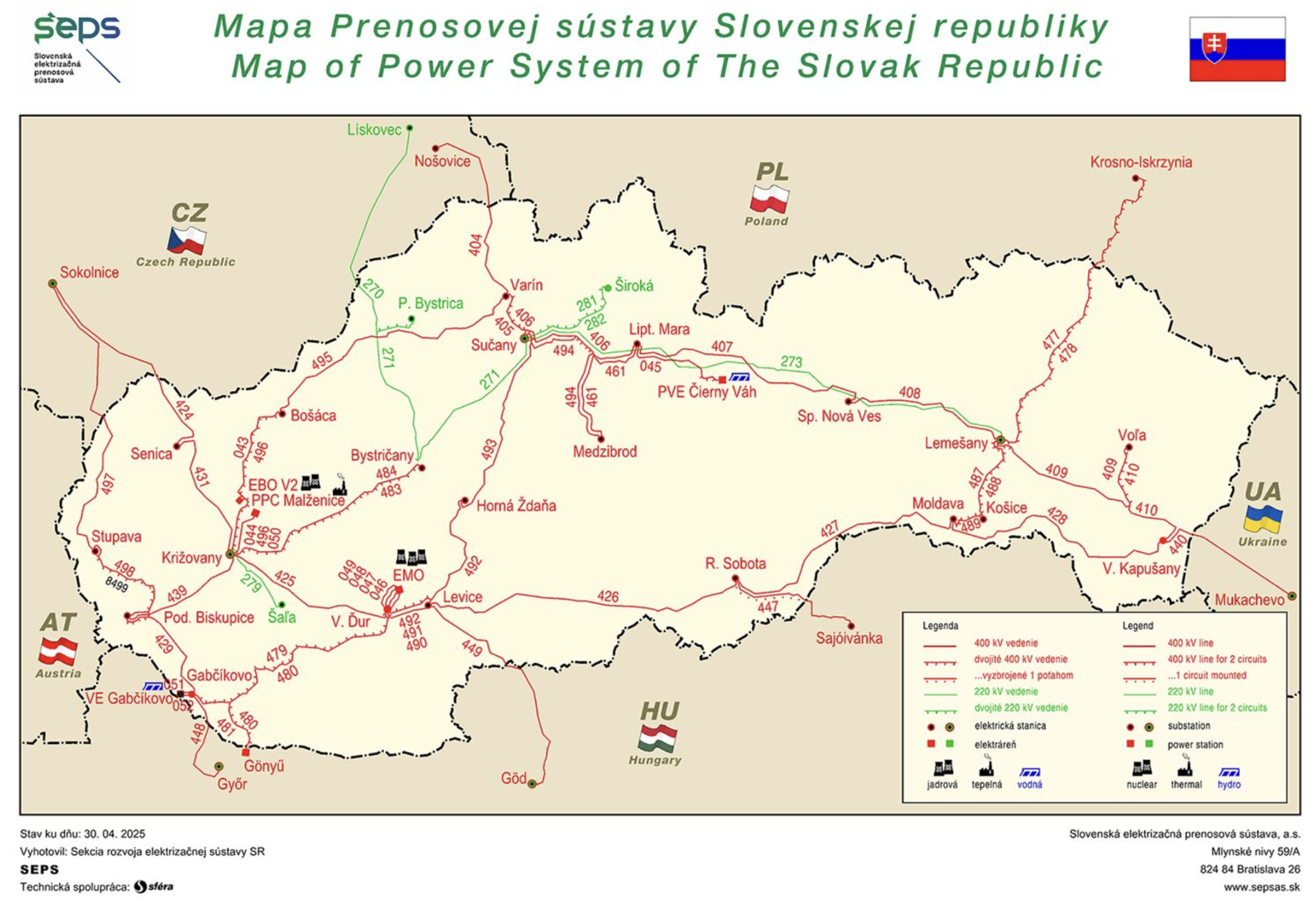
The electricity transmission system consists primarily of overhead power lines operating at 220 kV and 400 kV, supported by steel lattice towers, insulators, and grounding wires.
It is complemented by a network of substations, transformers, and protective devices that ensure the efficient and safe management of electricity flows across the national grid. The operation of the transmission system is coordinated by the National Dispatch Centre of SEPS (Slovenská elektrizačná prenosová sústava, a.s.), which maintains a continuous balance between electricity generation and consumption in real time. SEPS also plays a critical role in cross-border energy exchanges within the European interconnected grid (ENTSO-E), thereby contributing to regional energy stability and security. To enhance system reliability and minimize the risk of outages, the transmission network increasingly integrates advanced monitoring and diagnostic technologies. Modern solutions, such as Structural Health Monitoring (SHM) systems and Micro-Electro-Mechanical Systems (MEMS) sensors, enable real-time monitoring of vibrations, temperatures, and the physical condition of transmission lines.
These technologies facilitate predictive maintenance, allowing operators to detect anomalies and structural fatigue at an early stage, thereby preventing potential failures and improving the overall resilience of the power grid.
Furthermore, the use of digital twins and remote sensing tools is becoming increasingly common, enabling SEPS operators to simulate grid behavior under various load and weather conditions with greater accuracy. Combined with automated control systems, these innovations enhance the Slovak transmission network’s situational awareness and adaptive capacity, ensuring the secure and stable delivery of electricity to domestic and international consumers.